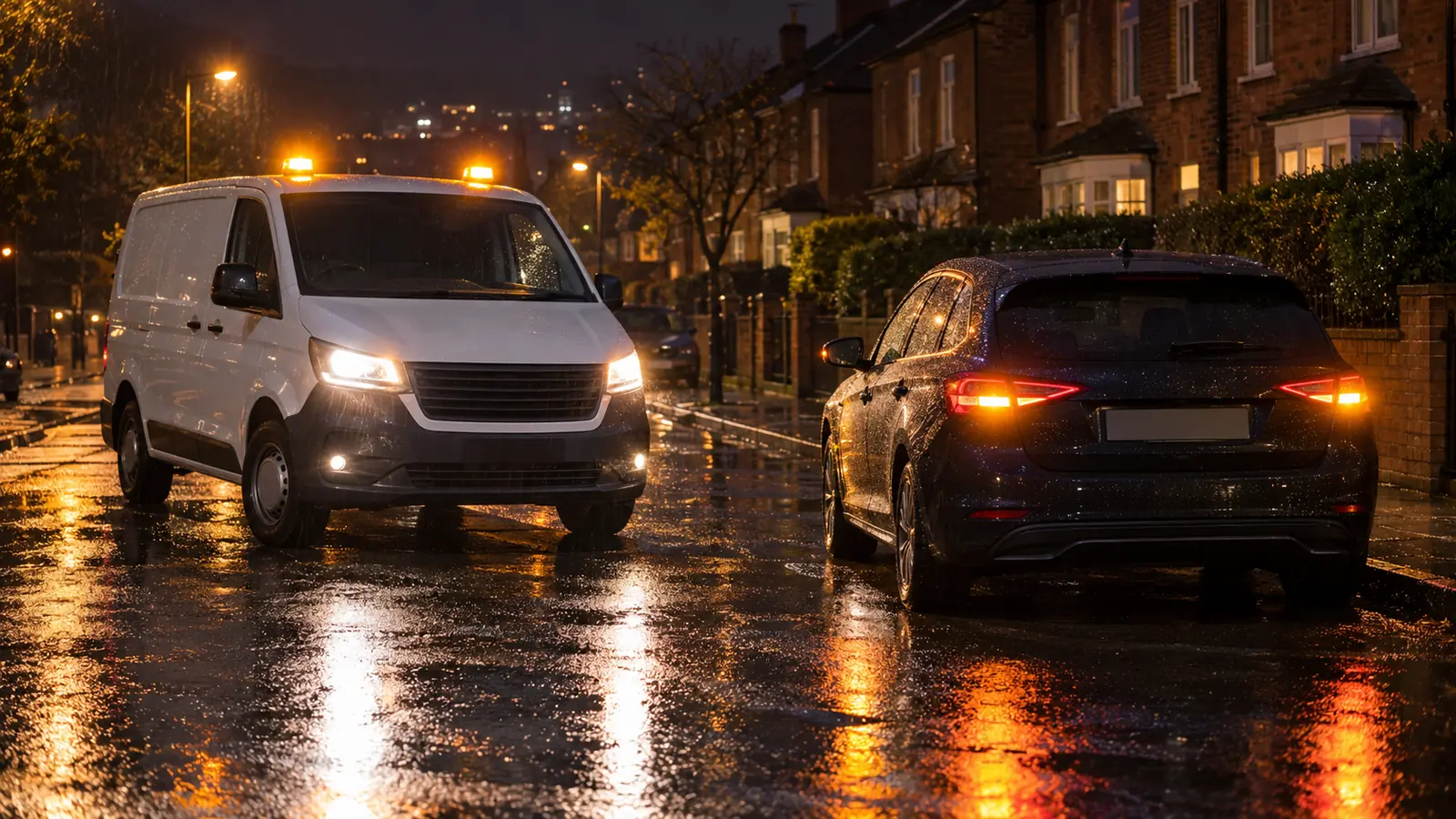
When the car will not start, the phone call is the one part you are in charge of. A few details, ready before you ring, help us find the car first time and arrive with the right kit. None of it has to be perfect. This is simply what we ask for a jump start in Dublin, and the reason behind each question.
First, are you somewhere safe?
If the car died in a live lane, on the hard shoulder of the M50, or on a fast stretch of the N11 or the N3, the battery can wait. Put the hazards on, get everyone out by the passenger doors, well clear of the traffic, and wait behind the crash barrier where there is one. Anyone injured: call 112 before you call us. On a driveway, in a multi-storey or on a quiet estate road, you can stay with the car and get ready for the call.
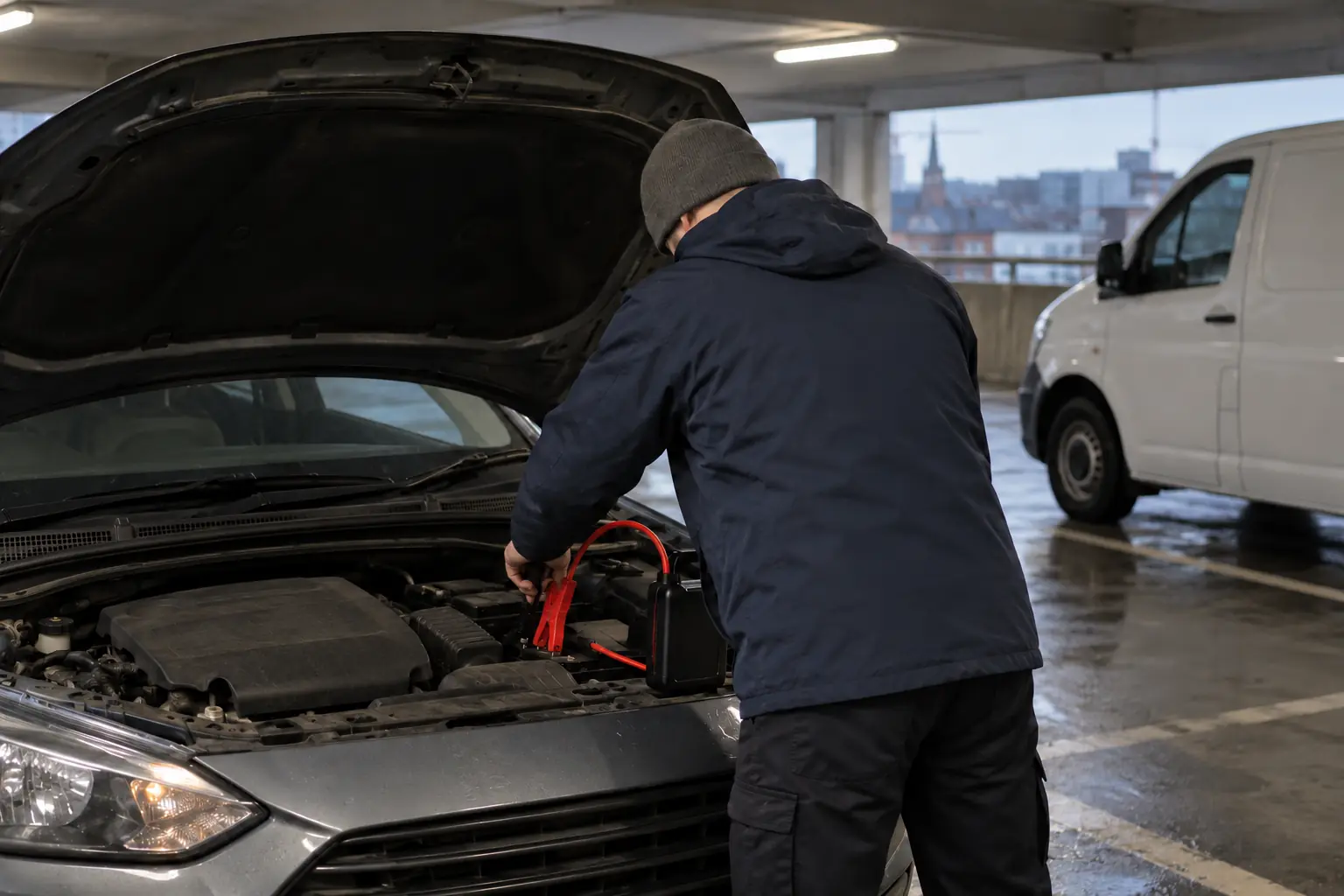
Exactly where the car is
An Eircode is the quickest way to pin down a house or a business in Ireland. Every address has its own seven-character code, and you will find yours on a utility bill or by searching the address online. If the car is not at an address, give us what you can see: the road name, a shop or a pub close by, the motorway junction number, or the name of the shopping centre. “The car park behind the apartments” covers half of Dublin, so the more specific, the better.
Car parks: the level, the bay and the barrier
Multi-storey and basement car parks are fine for a jump start, but they hide cars well. It helps to tell us:
- the level, and the bay number or colour zone if there is one
- any height barrier at the entrance, because not every van fits under it
- whether there is a ticket barrier or a gate, and who can open it
- whether the car is parked nose-in against a wall, which changes how we reach the battery
At apartment blocks and offices, a gate code or the name on the buzzer saves a lot of standing around in the cold.
The car itself
Make, model and year is enough, plus whether it is petrol, diesel, hybrid or electric. On plenty of newer cars the battery is not where you would expect: it can sit under the boot floor or beneath a seat, with a jump point under the bonnet instead. Knowing the model tells us which before we pull up.
On a hybrid or an electric car, the trouble is nearly always the small 12V battery rather than the big one. Our page on electric and hybrid cars that will not wake up explains why.
What the car does when you try it
Rapid clicking, a slow and lazy churn, total silence, or an engine that spins at its usual speed but never fires. Each one points somewhere different, and the last usually means a jump start will not help. We would rather say so on the phone than charge you for a call-out that fixes nothing.
Keys, alarms and the bonnet
Have the key with you, or the fob if the car is keyless. Many keyless fobs hide a small metal key for the driver’s door, which matters when the battery is too flat for the central locking. Some alarms sound for a moment when power comes back, so expect a short burst of noise. It also helps to know how your bonnet opens: the release lever is usually low down by the driver’s knee or in the footwell, then there is a second catch at the front.
Paying
You hear the price before anyone sets off: €120 for a jump start, one call-out figure with no charge for distance. Pay by card over the phone, by a card payment link we text you, or in cash.
A van or a work vehicle
Mention any second battery that runs tools, a fridge or a tail lift, and whether the van is at a yard or on a building site with set access times. There is more on our van jump start page.
Call 085 783 9202