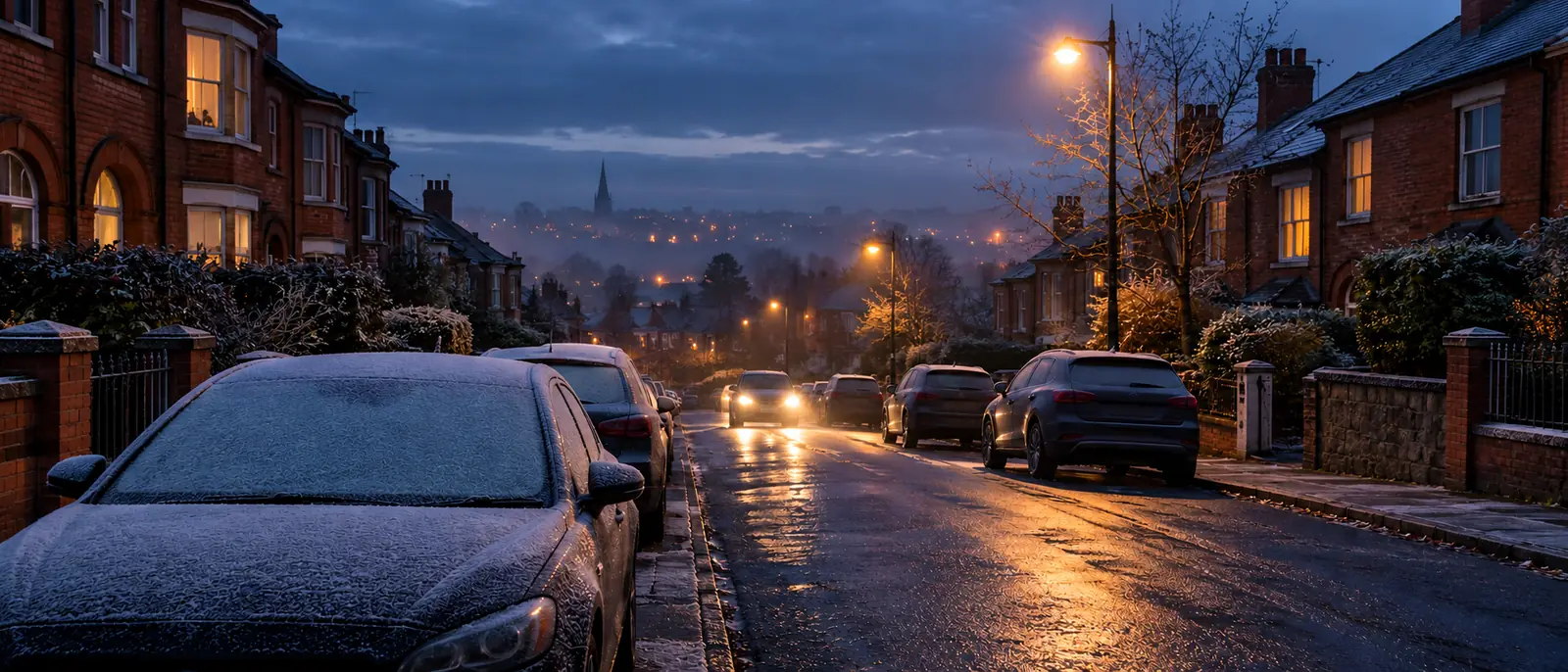
You turn the key on a frosty morning and the car clicks, turns slowly or does nothing at all. In Dublin, in the colder months, a weak battery is the most common reason.
Why the cold makes it worse
A battery gives less power when it is cold, and the engine needs more power to turn over. A battery that was fine all summer can fail on the first hard frost, usually when you are in a hurry. Short trips, lights on in the dark and a battery that is a few years old all make it more likely.
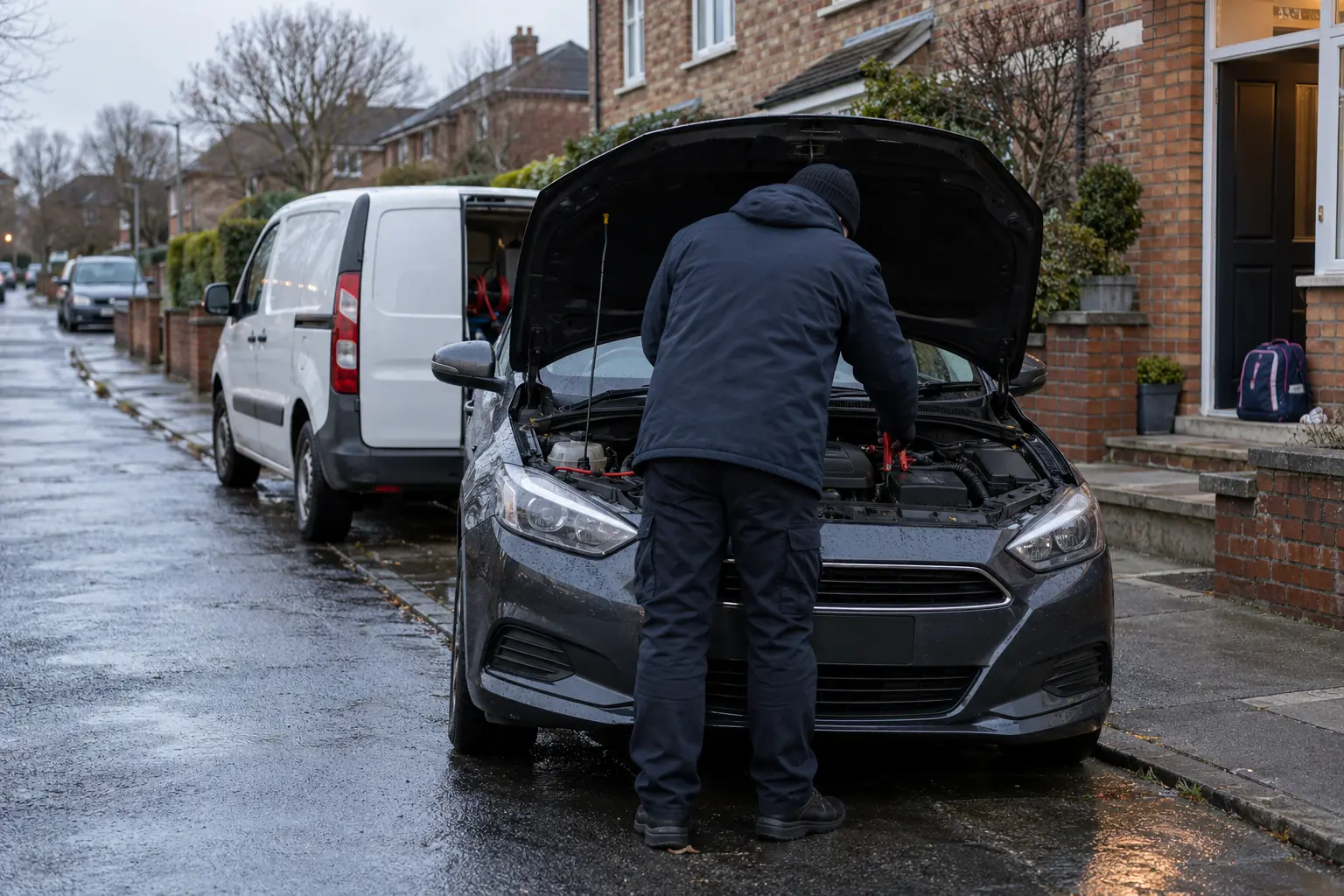
What to check first
- Listen. A fast clicking sound usually means the battery has too little power to turn the engine. Silence with the dashboard lights off points the same way.
- Look at the dashboard. If the lights are dim or flicker when you turn the key, the battery is weak.
- Check the lights. Make sure nothing was left on, such as interior lights or a phone charger.
- Try again once. Wait a minute, switch everything off, then try. Do not keep cranking: it drains what is left.
If the engine turns over normally but does not catch, the problem may be fuel or something else, and a jump start will not help.
When a jump start is enough
If the battery is simply flat, for example after the lights were left on, a jump start usually gets you moving. Drive for about half an hour at a steady speed to help it recharge.
When it is not enough
If the car starts after a jump but fails again the next morning, the battery probably cannot hold a charge any more. It is time to have it tested or replaced. The same goes for a battery that is four or five years old.
Electric and hybrid cars
An electric car also has a small 12V battery that runs the computers and unlocks the car. If it goes flat, the car can refuse to wake up even when the large battery is charged. Give us the make and model on the phone and we can usually say there and then whether a jump will work.
If you are on a motorway or in danger
If your car has stopped somewhere unsafe, get everyone out and away from traffic first. If anyone is hurt, call 112.
Call 085 783 9202